



Smart Emergency Management Platform Case Study
Jiaxing City has integrated its overall "Smart Fire Protection" plan with the fire safety requirements for the World Internet Conference. Centered around "one hub," "two core pillars," and and "one supporting pillar." By integrating data from various sources and leveraging multiple resources, it employs comprehensive IoT and internet technologies to create an open information resource sharing platform. The "Smart Fire Protection" security command platform is operational in Tongxiang and Wuzhen, providing a technical model and decision-making basis for addressing fire hazards, managing public fire safety incidents, preventing fires, and designing emergency rescue plans across the city.
Establish information channels to detect disaster occurrences in real time
The 'Smart Firefighting' emergency response platform is by no means a gimmick to grab attention. Instead, it introduces a revolutionary concept from a long-term perspective, activating a comprehensive suite of cutting-edge tools to accurately assess disaster situations as they unfold. The commander of Wuzhen Fire Brigade explained that according to key fire safety requirements, the "Smart Firefighting" command platform must address three critical issues: ensuring social entities promptly fulfill their primary fire safety responsibilities; detecting and confirming fire incidents in real time; and mobilizing the broadest possible resources to handle emergencies immediately.
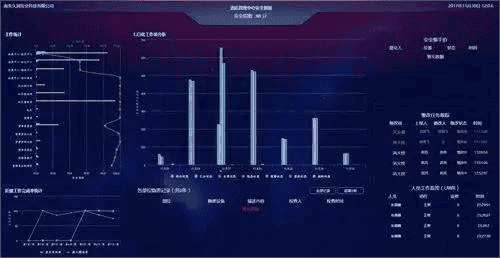
On the third floor of the Wuzhen Fire Brigade's Security Command Center, colored symbols dotted the electronic map display. "Gray markers indicate fire hydrants, green markers represent key facilities, and yellow indicates malfunctions." The fire chief initiated a simulated fire drill. As detection equipment at a key facility on the map identified a fire, its green marker instantly turned red. The left side of the screen immediately displayed the facility's details—whether it was a hotel, guesthouse, restaurant, or residential building—along with its exact address and even the owner's information. On the map, a 200-meter radius circle centered on the red marker appeared. Simultaneously, a text box on the right displayed detailed information about the firefighting personnel and the responsible unit within that radius.
Software development for the "Smart Fire Command Platform" and mobile app platform, designed for dedicated network integration. Upon receiving smoke detector alerts from fire locations, the command center simultaneously sends fire incident notifications via SMS to responsible fire units and property owners within the designated area. Nearby grid officers and property owners can promptly confirm the fire occurrence, effectively eliminating all limitations associated with manual fire reporting.
Upgrade hardware capabilities Accurately and effectively handle fire situations
So, does smart firefighting deliver faster response times? Where exactly does this speed manifest? To ensure rapid and effective fire incident handling, the innovative smart firefighting cloud platform leverages a dedicated network for technical support, weaving the entire command system into a vast "spider web." Currently, the Wuzhen platform's dedicated network utilizes 10-gigabit bandwidth for fire communications among Wuzhen's eight micro-fire stations and over 100 firefighters. It handles data exchange from more than 25,000 wired and wireless smoke detectors and alarms, maintaining substantial communication reserves to ensure network smoothness during simultaneous data interactions.
Data capacity forms the foundation of the 'Smart Firefighting' platform, aiming to deliver more effective solutions. The Wuzhen fire chief stated that the town's current smart firefighting requirements demand the ability to formulate accurate and appropriate response plans within a short timeframe during scenarios involving large crowds and complex fire situations. Throughout Wuzhen's urban area, building information for every facility connected to the Smart Firefighting platform has been integrated into the command center's cloud-based data platform. Upon receiving a fire alert, operators can access detailed floor plans and structural layouts of connected buildings via the left side of the command screen. Simultaneously, linked smoke detectors help pinpoint the approximate scope of the fire.
Comprehensive Key Monitoring Preemptive Prevention of Fire Hazards
Wuzhen has become the permanent venue for the World Internet Conference, presenting unprecedented demands and pressures on fire safety and security. Enhancing response capabilities is imperative, yet the ultimate goal remains to nip fires in the bud.
In the guesthouses of Wuzhen, each room is equipped with a smoke detector featuring an antenna. These detectors are directly connected to the command center. Should any signal issues arise or a detector fail and go offline, the terminal will emit an alert sound. If the issue remains unresolved, the command center will call to inquire.
In Wuzhen's town center, several hotels' security rooms also feature independently managed water source monitoring systems. High-rise buildings must maintain sufficient water pressure for firefighting at all times. Should the fire pumps on the hotel's ground floor lose pressure, the water source monitoring system will trigger an alarm. If the issue remains unresolved for a period, the command center will be notified.
Residential homes are equipped with newly installed gas monitoring devices and current monitoring devices. Real-time monitoring of electricity and gas usage is currently operational in select neighborhoods. Should sensors detect abnormal fluctuations, the system will not only trigger automatic alarms but also relay information to neighborhood receivers, enabling the command center to receive advance notification.