



Narrowband Self-Organizing Network Base Station System: Flexibly Responding to Disasters and Buildin
In disaster emergency response, communication networks form the foundation for coordinating rescue operations, transmitting information, and ensuring safety. However, disasters such as earthquakes and floods often disrupt traditional communication networks, posing severe challenges to rescue efforts. As a novel emergency communication technology, narrowband self-organizing network base station systems provide stable and reliable communication support at disaster sites through their rapid deployment, autonomous networking capabilities, and robust interference resistance.

This communication device features rapid deployment capabilities, enabling the establishment of a communication network within just 5 minutes after a disaster without relying on existing infrastructure. It offers exceptional stability and reliability, with strong anti-interference capabilities and extensive coverage, allowing it to handle diverse complex environments with ease and provide robust communication support for rescue operations.
Itscommunication range features a single-base-station coverage radius of up to30kilometers, with multi-base-station networking enabling regional coverage; diverse communication modes support point-to-point, point-to-multipoint, and relay communications, flexibly adapting to various scenarios; Exceptional network capabilities support over 200 nodes, with dynamic topology adjustment and multi-hop forwarding. Utilizing licensed or public narrowband spectrum ensures stable transmission despite limited bandwidth, meeting high-reliability demands. The equipment is compact and portable, featuring a small footprint and weighing less than 15kg, enabling rapid mobile deployment to establish a robust foundation for rescue communications.

Narrowband self-organizing base station systems enable rapid deployment of communication networks, ensuring instant transmission of rescue commands. This significantly reduces decision-making and execution time, substantially enhancing rescue efficiency. By leveraging autonomy and flexibility, these systems address shortcomings in traditional communications, strengthen disaster response capabilities, and improve rescue reliability.
During a certain earthquake, local communication facilities suffered widespread disruption. Within one hour after the quake, a narrowband self-organizing network base station system was deployed, providing stable voice communication and disaster data transmission between the command center and on-site rescue teams. Through this system, the actions of over 100 rescue personnel were successfully coordinated, saving the lives of dozens of trapped individuals.
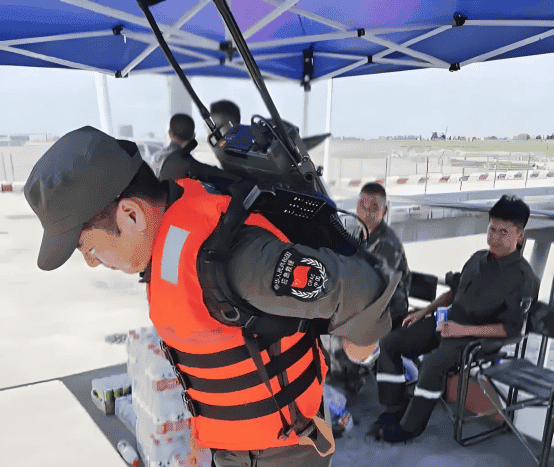
The narrowband self-organizing network base station system DY-TXE-NNSoffers a new technological solution for emergency rescue operations through its efficient deployment, stable transmission, and broad applicability. It contributes to building a more efficient, intelligent, and reliable emergency rescue system, providing robust safeguards for societal security.