



Drones: Eyes in the Sky, Lifesaving Tools
In emergency rescue operations, drones have become indispensable equipment due to their rapid deployment, flexible operation, and panoramic surveillance capabilities. Whether conducting disaster assessments, searching for missing persons, or transporting supplies, drones significantly enhance rescue efficiency while reducing risks for rescue personnel.
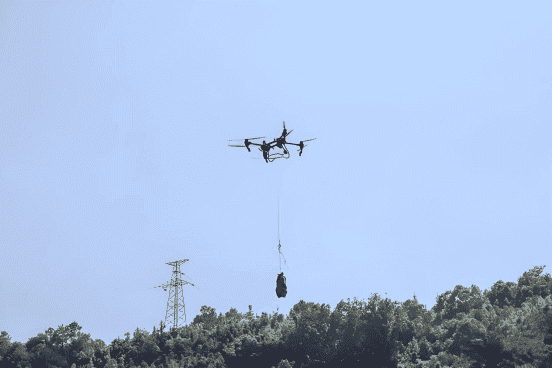
In 2024, a sudden landslide struck a mountainous region, partially burying a village and leaving dozens of villagers unaccounted for. The complex terrain made it difficult for traditional search and rescue equipment to reach the landslide area, while the site also posed safety risks to rescue personnel. Rescue teams deployed multiple drones to assist and conduct comprehensive operations. Drones navigated along pre-programmed routes using positioning systems. Combining thermal imaging and optical cameras, the drones operated seamlessly at night. They eventually located trapped villagers in a remote area, guiding ground teams to reach survivors while avoiding secondary landslide hazards.
When personnel cannot arrive promptly, drones rapidly deliver emergency supplies such as first-aid kits, food, and communication devices to temporarily alleviate villagers' distress and buy time for subsequent rescue operations.
Drones can be rapidly deployed in rescue operations to transmit high-definition footage and real-time data. Utilizing thermal imaging and infrared technology, they accurately detect vital signs in low-visibility scenarios such as smoke-filled environments and darkness. Theyswiftly pinpoint target areas from elevated vantage points,enabling timelysupport for rescue planning while minimizing risks to personnel on the ground.
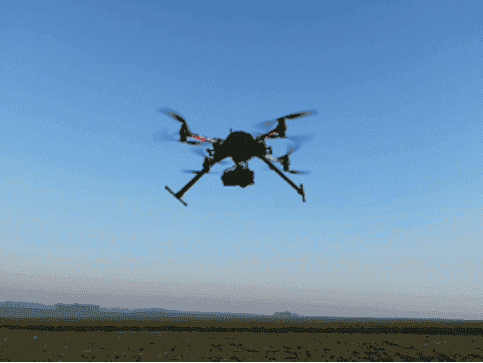
Its user-friendly operation keeps rescue personnel out of harm's way in hazardous areas, enhancing safety. Compared to traditional helicopters, it offers lower costs, faster deployment, and greater adaptability. Leveraging AI technology, the drone can autonomously patrol, analyze data, and assist in assessing disaster scope and damage. Enhanced obstacle avoidance capabilities also improve stability and operational efficiency in complex environments.
In complex and dynamic environments, drones serve as a pair of "eyes that see far," enabling us to swiftly and accurately assess situations and providing scientific basis for rescue decisions. Simultaneously, their efficiency and safety significantly reduce rescue difficulties, allowing us to focus more resources on saving lives.