



Hand-Crank Alarm Application Case
The operating principle of a hand-cranked alarm primarily relies on mechanical energy conversion and the generation of sound or light. Specifically, when the user cranks the alarm's handle, an internal gear-based speed-increasing mechanism converts the rotational force from human effort into higher rotational speed. Subsequently, components such as the clutch slider, fixed wheel, and alarm wheel work together to drive the alarm wheel at high speed. During operation, the ratchet wheel compresses the absorbed air into high pressure, forcing the gas out through the fixed aperture of the fixed wheel, thereby producing the audible alarm sound.

The higher the rotational speed, the louder the sound produced by the hand-cranked alarm, meaning its audibility is often determined by the user's physical strength. Fixed alarms can leverage force, requiring only vigorous cranking of the handle. Portable alarms, however, offer greater mobility and can cover a wider area. Under ideal conditions, the coverage radius of a hand-cranked air raid alarm can even reach 2,500 meters.
Local villagers and rescue personnel are equipped with hand-cranked alarms. Upon detecting a flash flood, they swiftly crank the alarms to emit a sharp, penetrating warning sound. This alarm can travel long distances through the complex terrain of mountainous regions, quickly alerting nearby individuals.
Additionally, since manual alarm devices require no power source and do not rely on communication infrastructure, they remain fully operational during power outages and communication disruptions. This significantly enhances the speed and efficiency of emergency response, buying valuable time for local villagers and rescue personnel to evacuate and conduct rescue operations.
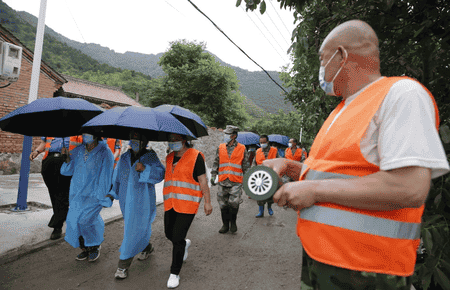
Case studies on the application of hand-crank alarms in emergency management demonstrate their unique advantages and value. In specific scenarios, hand-crank alarms can compensate for the shortcomings of conventional electronic alarms, enhancing the timeliness and effectiveness of emergency responses. Therefore, in emergency management operations, the role of traditional emergency tools such as hand-crank alarms should be fully considered and utilized to provide more comprehensive and effective safeguards for responding to emergencies.