



Aviation Marker Ball: The "Sky Lighthouse" Guarding High-Voltage Power Lines
With the rapid development of the low-altitude economy, emerging sectors such as drone logistics and general aviation flights have surged, significantly increasing the risk of collisions between power transmission lines and low-altitude aircraft. According to statistics from the Civil Aviation Flight Accident Compilation,between 1952 and 2021, 25.85% of general aviation collisions with obstacles involved power lines, making them one of the primary threats to low-altitude flight. Against this backdrop, aviation marker balls for power lines have emerged as critical technical equipment for ensuring flight safety and the stability of power facilities, owing to their high visibility, weather resistance, and low maintenance costs.

In areas with dense power facilities and frequent low-altitude flight activities, enhancing awareness campaigns about aerial marker balls on transmission lines enables pilots, power workers, and the general public to fully understand their function and importance. This not only helps increase pilots' vigilance toward transmission lines and strengthen awareness of protecting power facilities, but also promotes shared attention to power safety and aviation safety across all sectors of society. By forming a concerted effort, we can jointly safeguard public safety.
The diameter of aerial marker balls for transmission lines is typically 600 millimeters, achieving optimal visual effectiveness. They are predominantly manufactured from polymer materials or engineering plastics, offering excellent weather resistance and impact resilience. Additionally, some models incorporate LED lighting technology to enhance nighttime visibility. Their conspicuous design enables pilots to quickly detect the presence of transmission lines during flight, allowing for timely evasive maneuvers and effectively preventing collision incidents.

After installing aviation marker balls on overhead power lines near an international airport, pilots can clearly see these markers during takeoff, landing, and low-altitude flights. This enables them to accurately determine the location of the power lines, successfully preventing multiple potential collision incidents. This measure not only safeguards flight safety at the airport but also maintains the normal operation of surrounding power facilities.
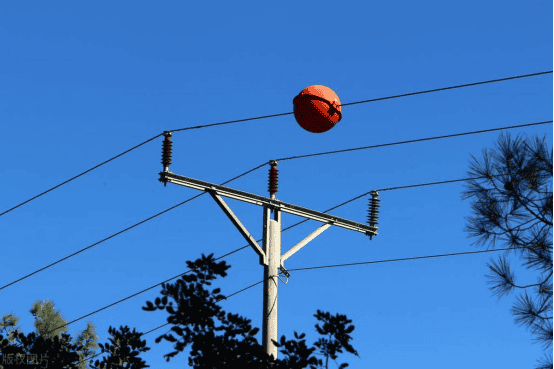
Aviation Marking BallThe DY-DLE-BZQ is crucial for ensuring low-altitude flight safety, particularly in complex areas such as near airports, across rivers, and over mountains. Simultaneously, it protects power facilities from aircraft collision damage, ensuring stable power supply, reducing economic losses, and preventing power outages that impact social life and production.