



Actual Case Study of Diving Salvage System: Salvage Operation of the Sunken "Changxing Oil Tank
In early 2020, a cargo ship named the "Changxing Oil Tanker" sank in the East China Sea during severe weather conditions. The vessel was carrying a large quantity of petroleum products, posing a significant risk of marine pollution. The rescue team swiftly launched salvage operations, with the diving salvage system playing a crucial role. This effort successfully prevented environmental contamination and completed the salvage of the sunken vessel.
I. Case Review
1. Underwater Survey and Positioning
Prior to salvage operations, the rescue team employed sonar detection and remotely operated vehicles (ROVs) within the diving salvage system to precisely locate the sunken vessel. Visual inspections were conducted using camera equipment carried by divers. In the challenging environment of sediment burial, the high-precision positioning equipment of the diving salvage system enabled divers to clearly determine the vessel's burial status.
2. Underwater Fixing and Reinforcement Operations
To prevent hull damage, divers reinforced the vessel using underwater welding tools from the diving salvage system. Equipped with the system's oxygen supply and extended-duration diving support equipment, divers were able to work continuously in deep-water conditions, ensuring the reinforcement work was completed successfully.
3. Buoyancy Salvage and Oil Discharge Operations
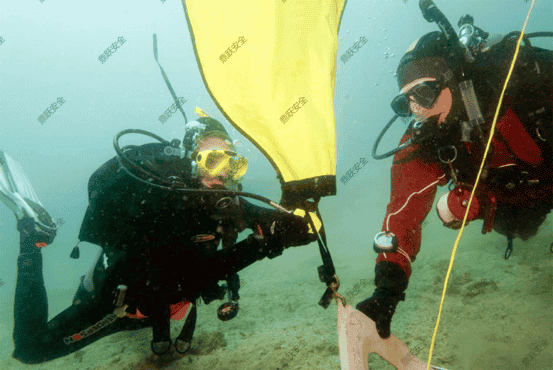
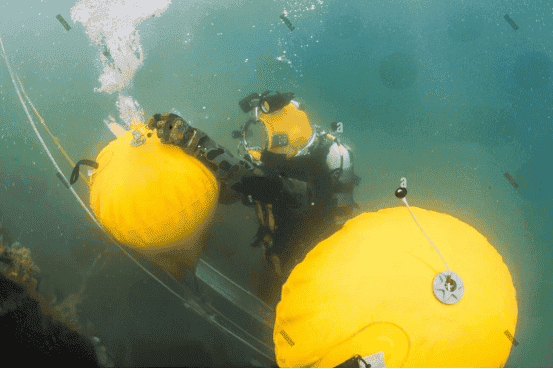
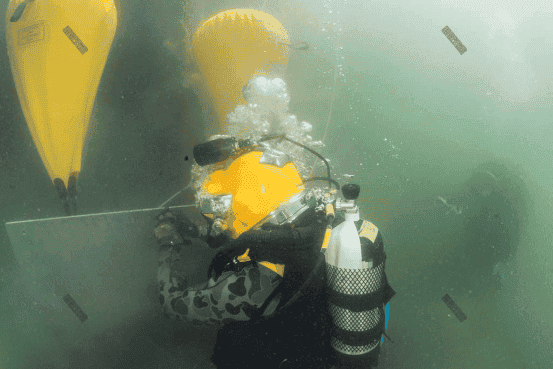
Divers used buoyancy bags within the diving salvage system to gradually raise the hull. Simultaneously, the system assisted divers in sealing the oil tank hatch and safely extracting fuel through an oil-water separator, preventing environmental pollution caused by oil spills.
4. Wreckage clearance and salvage completed
The salvage system assisted divers in cutting portions of the wreckage into smaller sections, which were then recovered in batches using buoyancy bags. Ultimately, the sunken vessel and its cargo were safely transferred to a tugboat, successfully concluding the salvage operation.
II. Case Analysis
1. Technical Complexity and Environmental Challenges
The wreck lies at a depth of 30 meters, with portions of the hull buried in silt. The high-precision positioning equipment and diving support system of the salvage operation effectively addressed the challenges of locating the vessel, enabling divers to safely and efficiently complete the extended underwater operations.
2. Environmental Protection and Emergency Response
In response to the risk of oil spills, the diving and salvage system not only successfully raised the sunken vessel but also facilitated the safe discharge of fuel, preventing environmental contamination. This operation demonstrated the system's reliability in underwater emergency response.
3. Multi-technology collaboration and operational efficiency
The diving salvage system, working in tandem with ROVs, sonar detectors, welding equipment, and other tools, has significantly boosted salvage efficiency while reducing risks and time consumption associated with diving operations.
4. Safety and Diver Protection
The system ensures diver safety in deep-water environments through continuous oxygen supply and real-time monitoring, preventing decompression sickness and other risks, thereby providing robust support for the entire salvage operation.
III. Conclusion
The salvage operation of the "Changxing Oil Tanker" in the East China Sea demonstrated the efficiency and versatility of the diving salvage system in complex underwater environments. Through precise positioning, buoyancy support, and fuel handling, the system successfully overcame multiple technical challenges, setting a benchmark for modern salvage operations.