


Super Typhoon Capricorn Approaches; Meteorological Observatory Issues Red Alert
The Central Meteorological Observatory continued to issue a red typhoon warning at 10:00 on September 5: Typhoon Capricorn, the 11th typhoon of the season, is currently a super typhoon. At 9:00 AM on September 5, its center was located over the northern South China Sea, approximately 590 kilometers southeast of Xuwen, Guangdong. Winds near the center reached Category 17 (58 meters per second), with a central pressure of 925 hPa. Capricorn is forecast to move northwestward at 10-15 kilometers per hour while intensifying further. It is expected to make landfall along the coast from Qionghai, Hainan to Dianbai, Guangdong between the afternoon and night of September 6, with winds reaching force 16-17 on the Beaufort scale. After landfall, the typhoon will gradually weaken and enter the Gulf of Tonkin.
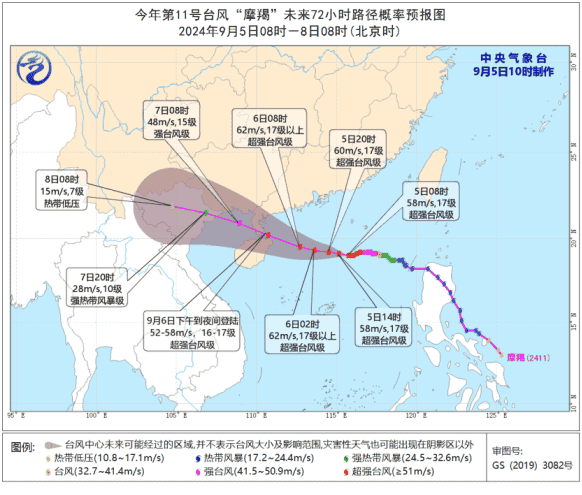
Strong wind forecasts indicate that most areas of the South China Sea, Guangdong, and Hainan will experience winds of force 6 to 12, with winds near the typhoon's center reaching force 17 or higher. Regarding precipitation, heavy rainfall is expected in southern Guangdong and northern Hainan Island, with localized rainfall totals reaching 100 to 160 millimeters.
Below are some common precautions for typhoon weather:
Early Warning: Monitor typhoon forecasts issued by meteorological authorities to stay informed about changes in the typhoon's path and intensity, and prepare protective measures in advance.
Reinforce Buildings: Inspect vulnerable areas such as windows and doors in buildings. If necessary, use windproofing devices like window reinforcement panels to prevent damage from strong winds.
Clear the surrounding area: Secure or store loose items on balconies, in yards, and other outdoor spaces to prevent them from being blown away by strong winds and causing hazards.
Stockpile emergency supplies: Prepare ample drinking water, food, medicine, flashlights, batteries, and other emergency items to cope with water and power outages.
Avoid going out: During a typhoon, minimize outdoor activities and avoid going out when the storm is passing through. If you must go out, choose safe routes and avoid dangerous areas such as flooded roads and bridges.
Evacuation and Shelter: If your residential area is at risk of direct typhoon impact, follow local government instructions and evacuate promptly to a designated safe shelter.
Preventing Secondary Disasters: Typhoons are often accompanied by heavy rainfall. Residents should be vigilant against secondary disasters such as flooding, landslides, and mudslides. Those living in low-lying areas and on slopes should exercise particular caution.