


Typhoon Pabuk has formed, and its impact on Hainan is gradually becoming apparent.
According to the Central Meteorological Observatory, Typhoon Pabuk, the 26th typhoon of the year, formed over the northwest Pacific Ocean on the afternoon of December 23. Its center is located approximately 180 kilometers northwest of Yongshu Reef in the Spratly Islands, with maximum sustained winds of 8 on the Beaufort scale (18 meters per second) and a central pressure of 1000 hPa. The typhoon is forecast to move west-northwestward at 5-10 kilometers per hour, gradually approaching the southeastern coast of Vietnam.
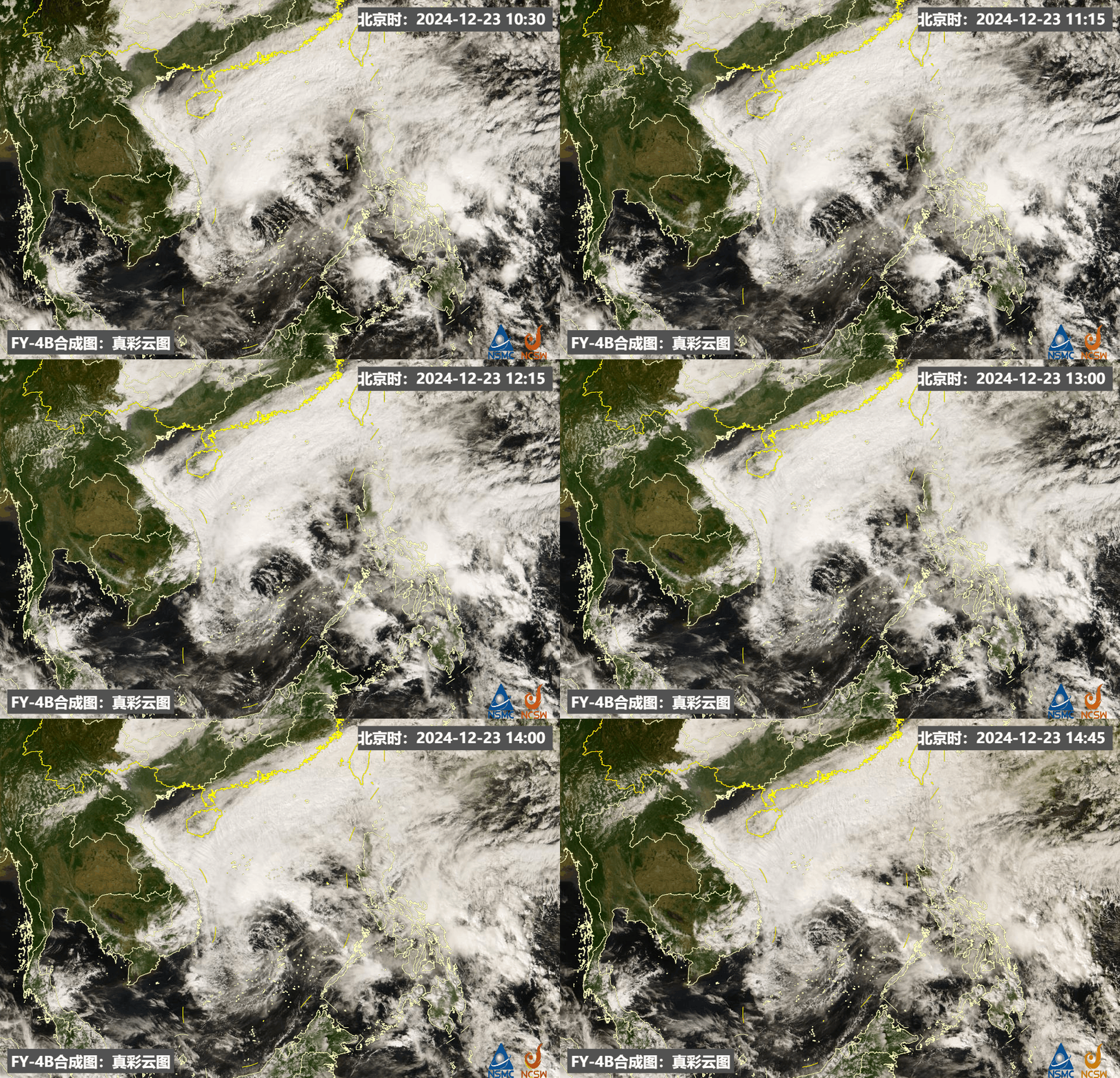
Due to the combined effects of Typhoon Pabuk and cold air, winds have significantly intensified along the coast of Hainan and in some surrounding waters. From the afternoon of the 23rd to the night of the 24th, northeast winds of force 6 to 7, with gusts reaching force 8 to 9, will occur in the waters from Wenchang and Qionghai to Sanya, as well as near the Zhongsha Islands. Northeast winds of force 5 to 6, with gusts reaching force 7 to 8, will affect the waters from Ledong and Dongfang to Haikou, and the Gulf of Tonkin.
Regarding precipitation, Hainan Island will experience persistent overcast and rainy conditions over the next three days, though rainfall amounts will remain generally light. From the afternoon of the 23rd through the night, light rain is expected across northern, central, and eastern Hainan Island, with isolated light rain in western and southern areas. On the 24th, central and eastern regions will be overcast with light rain, while northern areas may see isolated light rain and western regions will be overcast to partly cloudy. On the 25th, rainfall will expand, with possible moderate to heavy rain in parts of central and eastern areas, and light to moderate rain in the north.

The meteorological department warns that Typhoon Pabuk will bring strong sea winds and frequent rainfall. The public should be vigilant against adverse travel conditions caused by coastal waves and slippery roads, particularly regarding traffic safety. Meanwhile, coastal and offshore workers should stay updated on weather alerts and implement measures to guard against strong winds and waves.