


Solar-Powered Typhoon Warning Signal Pole Provides Early Warning for Natural Disasters Including Typ
China's coastal regions frequently suffer from typhoon strikes, causing immense damage. Typhoons are characterized by their sudden and unpredictable nature, striking before people can react and inflicting rapid threats to personal safety and economic losses. On average, China's coastal areas endure more than seven typhoon strikes annually, each bringing substantial economic damage.
The Hazards of Typhoons:
Typhoons are immense reservoirs of energy, with wind speeds exceeding 17 meters per second and sometimes surpassing 60 meters per second. Measurements indicate that when winds reach Category 12, the wind pressure perpendicular to the wind direction can reach 230 kilograms per square meter.
On a smaller scale, it will cause inconvenience to our daily lives. Fallen billboards and cyclists being knocked off their bikes can pose hazards. More seriously, typhoons often bring torrential rains, causing sea levels to rise dramatically. Combined with the strong winds, this generates massive waves that flood homes and wash away roads and bridges. The immense pressure from the typhoon's gale-force winds can topple buildings, uproot trees, send rocks and sand flying, and injure both people and livestock.
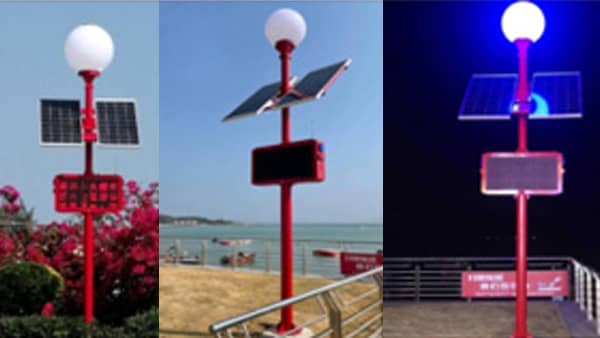
How to standardize, scientifically advance, and informatize coastal typhoon preparedness efforts to achieve early warning, early management, and early prevention—an intelligent typhoon warning, monitoring, and surveillance system has become an essential tool for mitigating typhoon-related disasters along the coast.
Our Dingyue Safety Technology solar-powered typhoon warning signal poles enable real-time monitoring, early warning, and rapid response to wind and flood hazards across large areas. They also provide meteorological environment monitoring, resource management, contingency plan management, and emergency command functions. Through environmental sensor monitoring units that track surrounding conditions and collect data, the system issues early warnings upon detecting abnormal typhoon activity. It activates red and blue warning strobe lights to alert people of an impending typhoon, enabling them to take preventive measures in advance.