



首页 >>
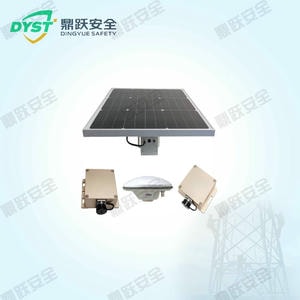
名称:Online Monitoring Device for Tower Inclination of Beidou Transmission Line Towers
型号:
I. Requirements Analysis Transmission lines are predominantly overhead structures operating under extremely harsh conditions. In adverse geological zones such as desert areas, high-salinity soil regions, mining subsidence zones, and mountainous landslide areas, tower foundations are prone to deformation under the combined effects of gravity, stress, and natural disturbances. This leads to tower tilting, collapse, and line breaks, causing power supply disruptions that severely impact production a
产品详情
I. Requirements Analysis
Transmission lines are predominantly overhead structures operating under extremely harsh conditions. In adverse geological zones such as desert regions, high-salinity soil areas, subsidence zones, and mountainous landslide-prone areas, tower foundations are susceptible to deformation due to gravitational forces, stress, and natural disturbances. This leads to tower tilting, collapse, and line breaks, causing power supply disruptions that severely impact production and daily life while resulting in substantial losses. Our company's developed Beidou Tower Tilt Online Monitoring Device for transmission lines enables real-time monitoring of tower inclination. It provides timely insights into the safety and reliability of operational towers. Based on the trend analysis of tilt monitoring data, it issues multi-channel pre-alerts for towers exceeding tilt thresholds. This facilitates maintenance planning, guides repair and upkeep efforts, and alerts operations personnel to reinforce foundations, thereby preventing tower collapse incidents.
II. Working Principle
The main unit of the Beidou Tower Tilt Online Monitoring Device for transmission lines collects tower inclination data—including longitudinal tilt angle, lateral tilt angle, and composite tilt angle—from tilt sensors. This data undergoes digital compression and encoding before being transmitted via 4G/5G/WiFi wireless networks or dedicated power networks to the monitoring center. Upon decoding the data signals, the monitoring center visually displays tower tilt information on screens through numerical readings and graphical charts. Monitoring personnel at the center use the data monitoring client to view real-time conditions at each monitoring point. Maintenance staff analyze the tower inclination data transmitted from the field. Should any abnormal warning information appear, they immediately initiate corresponding emergency measures to ensure the safe operation of high-voltage transmission lines.
III. Features and Functions
1. Basic configuration for tower inclination monitoring: Main control unit, tower inclination monitoring unit, communication unit, power supply unit, BeiDou communication module, mounting brackets, and auxiliary materials.
2. Continuously collect data on the longitudinal and lateral tilt angles of towers, while simultaneously gathering parameters indicative of power supply performance, such as the monitoring device's power supply voltage and battery charge percentage.
3. Capable of collecting the communication signal strength at the location of the monitoring device;
4. Data acquisition methods include automatic acquisition and controlled acquisition.
5. Data Acquisition Interval: Based on the variation characteristics of the measured parameters, this interval can be set according to user requirements. The minimum interval is 5 minutes, with a default interval of 30 minutes.
6. Capable of accurately recording and storing real-time monitoring data, and correctly generating event identifiers during device malfunctions or other abnormal conditions; the monitoring device can store at least 90 consecutive days of monitoring data or data that the master station failed to upload due to communication issues or other problems.
7. Ensure the security of recorded data, preventing loss of dynamic data due to power interruptions, rapid or gradual fluctuations, or drops; prevent deletion of dynamic records through external access; prohibit manual deletion or modification of dynamic records; and prevent loss or erasure of recorded information.
8. Automatic alarm function for monitoring abnormal conditions such as equipment malfunctions and communication interruptions; includes fault alarm capabilities for data exceeding thresholds and device functional abnormalities, with configurable alarm thresholds for equipment status parameters.
9. Alarm messages can distinguish between various types of abnormal conditions, including monitoring data anomalies and device self-test failures.
10. Alarm information is transmitted remotely in real time, and alarm strategy settings can be modified.
11. The power supply unit typically includes an energy harvesting unit, a battery, and a controller; it features automatic float charging, overvoltage protection, undervoltage protection, overcurrent protection, and temperature compensation.
12. The power supply module is equipped with an independent charge/discharge controller, with a nominal voltage of DC+12V.
13. Under conditions of continuous absence of sunlight and no other power supply, the battery must be capable of sustaining the normal operation of the monitoring device for at least 15 days.
IV. Product Specifications
| Serial Number | Category | Project Name | Technical Specifications |
| 1 | Overall Performance | Complete System Configuration | Main Control Unit, Tower Tilt Monitoring Unit, Communication Unit, Power Supply Unit, Mounting Bracket, and Auxiliary Materials |
| Overall quality | Less than 30 kg (including solar panels and mounting brackets) | ||
| Material | Stainless steel body + hot-dip galvanized bracket | ||
| 2 | Inclination Monitoring Unit | Scope of Testing | -10°~10° |
| Resolution | 0.001° | ||
| Accuracy | Less than 0.05° | ||
| Output Method | Rs485 | ||
| Zero-Repeatability | Less than 0.01° | ||
| 3 | Communication Unit | Communication method | All-network 4G/5G/WiFi/Beidou communication module/wireless transmission |
| Data Security | Communication with the main site can utilize a dedicated VPN channel, with optional encrypted transmission. | ||
| Access Protocol | Compatible with monitoring platforms of provincial power companies such as China Southern Power Grid and State Grid | ||
| 4 | Power Supply Unit | Battery capacity | 60Ah/12V |
| Solar Panel Power Rating | 100W/18V | ||
| Power supply duration | The device can maintain normal operation for 15 days without external light. | ||
| 5 | Other parameters | Work Environment | Operating temperature: -40°C to +70°C; Relative humidity: 5% to 99% RH |
| Overall service life | Over 8 years | ||
| Protection Rating | IP66 |