



首页 >>
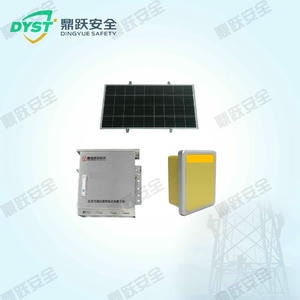
名称:Beidou Radar Deformation Visualization Monitoring Device
型号:
I. Requirements Analysis As a critical component of high-voltage transmission line systems, the structural safety of transmission towers directly impacts national economic development and public welfare. With the continuous strengthening of China's national capabilities, transmission towers have progressively evolved toward larger-scale designs. However, these vital transmission tower structures typically exhibit characteristics of height and flexibility. making wind loads, tower-line tensi
产品详情
I. Requirements Analysis
As a critical component of high-voltage transmission line systems, the structural safety of transmission towers directly impacts national economic development and public welfare. With the continuous strengthening of China's national capabilities, transmission towers have progressively evolved toward larger-scale designs. However, these vital transmission tower structures typically exhibit characteristics of height and flexibility. making wind loads, tower-line tension, and geological settlement the controlling loads in their structural design. In recent years, incidents of transmission tower collapses and failures under these conditions have occurred domestically, severely jeopardizing grid safety. Therefore, it is imperative to establish a reliable dynamic reliability analysis method for evaluating transmission tower structures under the combined effects of wind loads, tower-line tension, and geological settlement. This approach will provide a solid foundation and support for future transmission tower design and construction.
II. Working Principle
The BeiDou Radar Deformation Visualization Monitoring Device primarily monitors target displacement through interferometric surveying. Two key technologies within this system ensure high-precision, long-range displacement monitoring: interferometric surveying and linear frequency-modulated continuous wave (LFM-CW).
Interferometry is currently a highly mature measurement technology that primarily ensures precise measurement of displacement changes in target objects. This technology operates by detecting phase differences in radar reflected waves. The initial transmission and reception of radar waves establish the target's position and phase information. Subsequent transmission and reception determine phase information at a second location, with precise displacement changes calculated through phase difference analysis. Theoretically, the minimum detectable displacement change is 0.000000068 mm—a precision level fully meeting the demands of industries such as bridges, buildings, towers, and slopes.
This technology enables the measurement of radial displacement of the target object. The processing software can directly calculate displacement projections in other directions. Users can freely configure the geometric relationships of these projections to perform deformation measurements across the entire area.
III. Features and Functions
1. Collect vibration parameters for each tower foundation and wind vibration intensity parameters for conductors and ground wires, conduct safety assessments, and ensure the safety of transmission towers during operation.
2. Capable of backend algorithm processing and analysis, data storage, data modeling, and intelligent assessment of tower safety status;
3. Equipped with data security encryption capabilities and capable of connecting to the unified power grid platform;
4. Implement digital management of test data, enabling authorized personnel to access on-site tower safety data and safety assessment information via Ethernet or mobile devices based on their respective permissions.
5. The system not only enables remote early warning for problematic towers but also provides emergency response plans upon tower failure. Through the GIS system, it promptly locates the tower's geographic information and dispatches personnel for intervention.
Implement emergency measures such as entry, maintenance, and reinforcement to reduce the likelihood of accidents occurring;
6. Utilizing wireless transmission via 3G/4G networks eliminates the need to install sensors in the target area or approach/enter the target for measurement. With an accuracy of 0.01mm, the device captures even the slightest deformations of the target. It enables both dynamic and static monitoring of the target object, with user-configurable sampling frequencies. High-frequency data acquisition supports sampling rates up to 200Hz.
7. Accurately analyze the vibration characteristics of the target object within the 0–50 Hz range to obtain its multi-frequency vibration spectrum.
8. Modal analysis can be performed on the target object to extract its vibration modes at multiple natural frequencies.
9. Capable of providing continuous data acquisition under all weather conditions, including rain, wind, fog, etc.
10. Direct, real-time monitoring: By analyzing information from individual pixels, the deformation of the entire target can be determined. Continuous 24-hour monitoring of the entire target is possible, with remote measurement capabilities eliminating the need for on-site personnel.
IV. System Design
The main unit of the online radar deformation monitoring system for transmission towers is a data acquisition and processing system specifically developed by our company for power line surveillance. It enables remote data collection and processing via 4G/3G/GPRS/CDMA wireless networks. The system supports integration of radar deformation data, micro-meteorological data, tension data, inclination data, vibration data, and stress data, providing rational data assurance for the safe operation of transmission lines.
The spatial resolution of this system includes: - Distance resolution: 50 cm, meaning the distance dimension is divided into units of 0.5 m. - Maximum data sampling frequency: 200 Hz. Users can configure settings according to actual conditions.
The maximum monitoring distance of this system is 1 km, which users can freely adjust according to actual requirements. With a measurement accuracy of 0.01 mm, the device can detect even 0.01 mm deformations in the target object.