


首页 >>
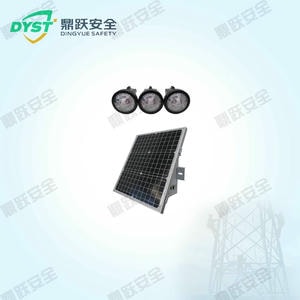
名称:Overhead Transient Characteristic Remote Fault Indicator
型号:
I. Requirements Analysis China's distribution networks are highly complex and prone to faults. Traditional fault indicators used for line fault sectioning cannot transmit fault information remotely and lack automatic fault location capabilities, necessitating manual line inspections that increase fault detection difficulty and time. While highly integrated distribution terminals offer functions like fault identification, isolation, network reconfiguration, reactive power/voltage control, an
产品详情
I. Requirements Analysis
China's distribution networks are highly complex and prone to faults. Traditional fault indicators used for line fault sectioning cannot transmit fault information remotely and lack automatic fault location capabilities, requiring manual line patrols that increase the difficulty and time required for fault detection. While highly integrated distribution terminals enable functions like fault identification, isolation, network reconfiguration, reactive power/voltage control, and optimized operation—making them a key option for distribution automation—their installation and operation are complex, limiting their deployment in certain locations. Therefore, it is essential to utilize simple, low-cost communication methods to upload fault information collected by fault indicators to the automation master station system, thereby achieving automatic fault sectioning.
II. Working Principle
When operational status changes occur on power distribution lines—such as short circuits, ground faults, power outages, or power restoration—the fault indicator detects these signals and transmits them via short-range radio frequency signals to the communication terminal. The terminal then sends the information to the main workstation via GSM/GPRS. The master station computer visually indicates the faulty section through flashing line colors corresponding to the affected segment. Simultaneously, a dialog box pops up to trigger an alarm notification. Additionally, the fault information is sent as a text message to the patrol technician's mobile phone.
III. Features and Functions
Overhead Remote-Read Fault Indicator Function
1. Fault Identification: Capable of identifying short circuits and ground faults, and distinguishing between permanent faults and transient faults;
2. Display Method: Flip-card display or illuminated display, visible within a 360° range. For flip-card displays, the display cards utilize night-vision reflective technology.
3. Automatic Reset: The fault indicator probe features delayed automatic reset and/or remote reset functionality. The automatic reset time can be user-specified or factory-set. Timing automatically commences upon fault occurrence, with a return time error not exceeding ±10%.
4. Live Installation and Removal: Supports installation and removal while energized, with no false alarms occurring during the process.
5. Signal Transmission: Equipped with an integrated wireless communication module, it transmits operational signals to overhead communication terminals.
Aggregation Unit Function
1. Wireless Reception: Receives fault location information transmitted via radio frequency by the communication-enabled fault indicator.
2. Information Transmission: Fault information is transmitted to the central station via communication methods such as GSM, GPRS, RS232, RS485, or Ethernet.
3. Backup Power Supply: Equipped with solar panels to charge the backup power supply. The backup power supply can sustain continuous operation of the communication terminal for 7 days without requiring additional energy replenishment.
IV. Technical Specifications
| 1 | Overall Performance | Complete System Configuration | Master Control Unit, Communication Fault Indicator, Communication Unit, Power Supply Unit, Mounting Bracket, and Accessories |
| Device Connections | Each communication terminal can connect to multiple sets of fault indicators. | ||
| Accuracy Rate of Fault Indicator Operation | greater than 90% | ||
| 2 | Communication-type Fault Indicator | Line voltage | 10kV |
| Insulation Withstand Voltage | 125kV | ||
| Short-time withstand current capability | 31.5kA/2s | ||
| Operating temperature range | -40°C to 70°C | ||
| Night Vision Range | ≥300m | ||
| The flop shows the number of possible actions. | Unlimited (solar-powered electricity) | ||
| Continuous Flash Duration | ≥5000 hours | ||
| 3 | Communication Terminal | Communication method | All-network 4G/5G/WiFi wireless transmission |
| Data Security | Communication with the main site can utilize a dedicated VPN channel, with optional encrypted transmission. | ||
| Access Protocol | Compatible with monitoring platforms of provincial power companies such as China Southern Power Grid and State Grid | ||
| 4 | Power Supply Unit | Nominal power of solar cells | 15W |
| Operating voltage of solar cells | 16V | ||
| Battery Service Life | More than 5 years | ||
| Continuous working time under rainy weather conditions | 15 days | ||
| Static power consumption | Not exceeding 0.5W | ||
| 5 | Other parameters | Work Environment | Operating temperature: -40 to +70°C; Relative humidity: 5 to 99% RH |
| Overall service life | Over 8 years | ||
| Protection Rating | IP66 |