


首页 >>
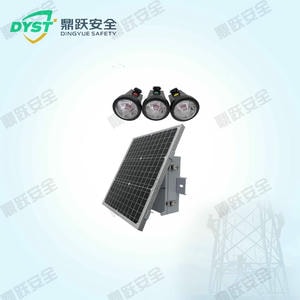
名称:Overhead Transient Waveform Remote Fault Indicator
型号:
I. Requirements Analysis The Overhead Transient Recording Remote Fault Location Monitoring System is an innovative intelligent monitoring product for distribution lines. The aggregation unit serves as the bridge between the system's core sensing units and the main station. Utilizing hybrid short-range and long-range wireless networking technology, the system enables channel monitoring, switching, and fault alarm capabilities. It supports system diagnostics, self-healing, and data retransmis
产品详情
I. Requirements Analysis
The Overhead Transient Recording Remote Fault Location Monitoring System is an innovative smart monitoring product for distribution lines. The aggregation unit serves as the bridge between the system's core sensing units and the main station. Utilizing a hybrid short-range and long-range wireless networking technology, the system enables channel monitoring, switching, and fault alarm capabilities. It supports system diagnostics, self-healing, and data retransmission after communication interruptions. A highly reliable power system utilizing solar energy and maintenance-free battery backup ensures stable operation. Power personnel can monitor line status and fault information in real time, providing comprehensive and reliable data support for optimizing distribution network structures.
II. Working Principle
The Overhead Transient Waveform Recording Remote Fault Location Monitoring System employs data acquisition modules to collect information, record waveforms, and identify faults on transmission lines. Through real-time current sampling and high-speed waveform recording, combined with big data analysis from the master station system, it accurately determines fault types, It detects and indicates various short-circuit and grounding faults, rapidly pinpointing the faulty section. Through the system's issue collection mechanism, the device transmits information to the monitoring center. Staff analyze the relevant data to determine the fault cause and location, simultaneously relaying the information to circuit management personnel. This enables timely resolution of transmission line issues and restoration of service.
III. Features and Functions
1. High-reliability power system with solar and maintenance-free battery primary and backup power supply;
2. Hybrid networking of short-range wireless and long-range wireless technologies enables real-time bidirectional interaction between the master station and aggregation units.
3. High-precision (±100μs) three-phase wireless time synchronization;
4. Three-phase synthesis captures transient zero-sequence current and electric field signals, enabling precise on-site detection and localization of ground faults.
5. GPS high-precision (1 microsecond) timing acquisition for obtaining accurate absolute timestamps;
6. Features channel monitoring, switching, and fault alarm capabilities, along with system diagnostics and self-healing functions.
7. Supports remote wireless maintenance and upgrades, with SMS management capabilities.
8. Innovative low-current (5A) self-powering technology enables stable real-time online operation.
9. Advanced electronic current transformers, with line current measurement accuracy of ±1%;
10. Optimized electric field sensor design to accurately detect voltage sags and power outages without interference from multiple circuits on the same pole.
11. Intelligent triggering of line current and high-speed recording of ground electric field (4kHz) to capture transient waveform signals during small-current ground faults.
12. High-precision (±100μs) wireless time synchronization enables synchronized acquisition of three-phase current and ground-to-ground electric field waveforms.
13. Low-power wireless two-way communication, supporting remote program upgrades and maintenance;
14. Live installation and removal, IP66 protection rating.
IV. Technical Specifications
| Serial Number | Category | Project Name | Technical Specifications |
| 1 | Basic Parameters | System Nominal Voltage (kV) | 10/20 |
| Rated Frequency (Hz) | 50 | ||
| 2 | Essential Features | Short Circuit Fault Indication | possess |
| Single-Phase Ground Fault Indication | possess | ||
| Remote Fault Alarm | possess | ||
| Remote signaling acquisition | possess | ||
| Fault Alarm Reset | possess | ||
| Live-line loading and unloading capability | possess | ||
| 3 | Performance Metrics | Correctness Rate of Phase-to-Phase Short-Circuit Fault Indication | 100% |
| Short-Circuit Fault Detection Action Error | ≤±10% | ||
| Minimum Identification Time for Short-Circuit Fault Detection | ≤40ms | ||
| Ground Fault Detection Methods | Transient Recording Method | ||
| Shortest fault current identification time | 20ms~40ms | ||
| 4 | Online Waveform Recording Function | Recording Function | Supports three-phase synchronous fault recording and transmits data to the communication terminal for synthesizing zero-sequence current waveforms. |
| Recording Trigger Conditions | Sudden changes in current or phase electric field strength should trigger simultaneous responses within the same group, with configurable thresholds. | ||
| Recording Range | Not less than 4 cycles before startup and 8 cycles after startup | ||
| Sampling frequency | Not less than 4 kHz | ||
| 5 | Sensor Requirements | Adapt to wire cross-sectional area | 35mm² to 400mm² |
| Observable range | 360° | ||
| Protection Rating | IP66 | ||
| 6 | Aggregation Unit Requirements | Minimum wireless communication distance between sensors and terminals | Not less than 30 meters |
| Solar Panel Output Power | Not less than 100,000 | ||
| Lithium-ion battery or lead-acid battery | Not less than 15 days (battery capacity ≥ 12Ah) |