



首页 >>
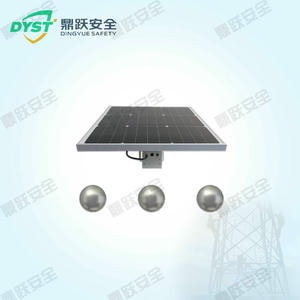
名称:Online Monitoring Device for Power Transmission Line Conductor Vibration
型号:
I. Requirements Analysis The risk factors for large-scale power grid failures caused by natural disasters such as ice accumulation, strong winds, and mudslides, as well as external damage from construction machinery, persist over the long term. These pose significant safety hazards to the stable operation of the power grid, necessitating real-time perception, monitoring, and early warning of transmission line operational status through online monitoring methods. The "Eighteen Major Grid Acc
产品详情
I. Requirements Analysis
The risk factors for large-scale power grid failures caused by natural disasters such as ice accumulation, strong winds, and mudslides, as well as external damage from construction machinery, persist over the long term. These pose significant safety hazards to the stable operation of the power grid, necessitating real-time perception, monitoring, and early warning of transmission line operational status through online monitoring methods. The "Eighteen Major Grid Accident Prevention Measures (Revised Edition)" issued by State Grid Corporation of China stipulates enhanced observation of conductor and ground wire icing and vibration. Online monitoring devices and ice observation stations (points) should be installed in icing-prone and vibration-susceptible areas. Transmission line vibration status sensing terminals can detect line amplitude and frequency information, enabling effective early warning of potential hazards during line operation. With the development of the ubiquitous power Internet of Things, comprehensive perception of grid status is required, placing higher demands on the collection of massive metadata. Therefore, deploying transmission line vibration status sensing terminals and systems enables timely acquisition of dynamic information about the line body and its channels, thereby enhancing the intelligence level of transmission line status perception.
II. Working Principle
The online monitoring device for transmission line conductor sway employs solar power and batteries for front-end power supply. It digitally compresses and encodes remotely collected sway and micro-meteorological data, then transmits this field sway data to the data monitoring center via 4G/5G/WiFi wireless transmission. Maintenance and monitoring personnel analyze and compare the sway and micro-meteorological data sent from the field. Upon detecting abnormal warning signals, immediate corresponding emergency measures are implemented to ensure the safe operation of high-voltage transmission lines.
III. Features and Functions
1. Basic configuration for motion detection: Main control unit, motion detection unit, communication unit, power supply unit, mounting bracket, and auxiliary materials.
2. Data Acquisition Function: Collects conductor vibration information (amplitude, vertical amplitude, horizontal amplitude, frequency), enabling on-site storage and remote uploading.
3. Continuously and accurately monitor the displacement, acceleration, and angular displacement of field conductors in real time. Integrate sensor measurements from the equipment for analysis, data modeling, and timely diagnosis of abnormal conditions.
4. Through core functionality—micro-meteorological data collection and analysis—front-end parameters such as temperature, humidity, wind speed, and wind direction are processed in real time in conjunction with conductor sway measurements.
5. Features a stable and robust battery management system, WeChat client, and inspection functionality, with an integrated encrypted security chip. Ensures real-time, efficient, and accurate protection of on-site safety facilities.
6. Data Communication: Monitoring devices and data transmission base stations collect data via 2.4GHz wireless communication; data transmission base stations transmit data to the monitoring platform through 4G/5G/WIFI networks.
7. Supports remote control: The data transmission base station enables remote maintenance, parameter configuration, and remote upgrades, with the capability to connect to designated platforms.
8. Power Supply Method: The monitoring device utilizes both wire-based power extraction and solar power extraction methods.
9. Capable of performing scheduled self-checks on the unit's primary components, with active alarm triggering upon detecting anomalies.
IV. Technical Specifications
| Serial Number | Category | Project | Technical Specifications |
| 1 | Overall Performance | Complete System Configuration | Main Control Unit, Motion Monitoring Unit, Microclimate Monitoring Unit, Communication Unit, Power Supply Unit, Mounting Bracket, and Auxiliary Materials |
| 2 | Overall quality | Less than 30 kg (including solar panels and mounting brackets) | |
| 3 | Material | Stainless steel body + hot-dip galvanized bracket | |
| 4 | Motion Monitoring Unit | Communication frequency | 470M |
| 5 | Angle measurement range | -90°~90° | |
| 6 | amplitude | 0~20m | |
| 7 | Frequency | 0.1 to 50 Hz | |
| 8 | Installation Method | Wire clamp fastening | |
| 9 | Long measurement cycle | 20 minutes | |
| 10 | Average power consumption | Power consumption <20 HA (3V) @25°C (Expected lifespan >10 years) | |
| 11 | Antenna | External antenna, height ≤5nm | |
| 12 | Battery capacity | 13000mAh High-Temperature Lithium-Ion Battery (150°C) | |
| 13 | Housing Material | aluminum alloy | |
| 14 | Micro-meteorological Monitoring Unit | Air temperature | Measurement Range: -40 to 80°C; Resolution: 0.1°C; Accuracy: ±0.3°C |
| 15 | Humidity | Measurement Range: 0-RH Resolution: 0.5% Accuracy: 3%RH | |
| 16 | Wind direction | Measurement range: 0–360°; Resolution: 0.1°; Accuracy: ±3°; | |
| 17 | Wind speed | Measurement range: 0–60 m/s; Resolution: 0.05 m/s; Accuracy: ±0.3 m/s; | |
| 18 | Communication Unit | Communication method | All-network 4G/5G/WiFi wireless transmission |
| 19 | Data Security | Communication with the main server can utilize a dedicated VPN channel, with optional encrypted transmission. | |
| 20 | Access Protocol | Compatible with monitoring platforms of provincial power companies such as China Southern Power Grid and State Grid | |
| 21 | Power Supply Unit | Battery capacity | 60Ah/12V |
| 22 | Solar Panel Power Rating | 100W/18V | |
| 23 | Power supply duration | The device can maintain normal operation for 15 days without light exposure. | |
| 24 | Other parameters | Work Environment | Operating temperature: -40 to +70°C; Relative humidity: 5 to 99% RH |
| 25 | Overall service life | Over 8 years | |
| 26 | Protection Rating | IP66 |