



Smart Emergency Response Solutions
With the rapid advancement of the times, the volume of fragmented information requiring processing has surged dramatically. When emergency incidents occur, this situation poses greater challenges to emergency management operations. Fragmented information implies diverse sources, varied types, and massive quantities, which increases the difficulty of information screening, integration, and analysis. In emergency situations, the swift and accurate acquisition and processing of information are crucial for formulating effective response strategies.
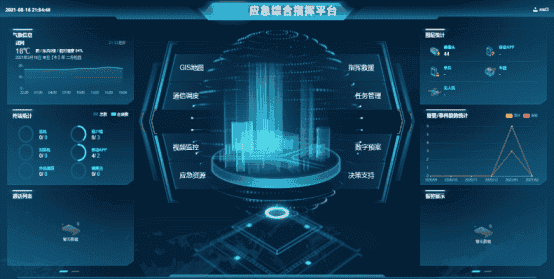
Smart Emergency Response Solutions refer to the application of modern information technologies—such as the Internet of Things, big data, cloud computing, and artificial intelligence—to establish a comprehensive, dynamic, real-time, and interactive emergency management system. This solution aims to enable effective prediction, timely response, precise handling, and recovery/reconstruction of emergency incidents. It not only encompasses all aspects of traditional emergency management but also emphasizes the pivotal role of information technology within it, alongside cross-departmental and cross-industry collaborative efforts.
Specifically, smart emergency response solutions require consideration and implementation in the following areas:
Requirement Analysis: First, conduct an in-depth analysis of potential disasters or emergencies to clarify the specific requirements and objectives for smart emergency response. This involves identifying the data content to be collected and analyzed, as well as the key areas and domains for emergency management.
Technical Support: Based on the results of the needs analysis, select appropriate information technology solutions. This may include sensor technology, communication equipment, data storage, and analytics platforms. These technologies will provide essential support for subsequent emergency management operations.
Establish a Smart Emergency Response Platform: Build a unified smart emergency response platform that integrates various resources and technological capabilities. This platform should possess functions including information collection and consolidation, prediction and early warning, emergency response and handling, as well as recovery and reconstruction, providing comprehensive technical support for emergency management.
Diversified Communication Methods: Ensure the resilience and diversity of communication networks by incorporating multiple communication methods, including satellite communications, wireless communications, and the internet, to guarantee uninterrupted communication for emergency command and rescue operations.
Data Collection and Transmission: Utilizing sensors and other devices to collect real-time data related to disasters or emergencies, and transmitting this data via networks to data centers. This data will provide crucial support for subsequent decision-making and analysis.
Data Analysis and Application: Utilizing technologies such as big data analytics and artificial intelligence to perform real-time analysis and processing of collected data. Extract valuable insights to provide decision support for policymakers, aiding in the formulation of more precise emergency response plans and measures.
Develop emergency response plans and measures: Based on the results of data analysis, formulate corresponding emergency response plans and measures. These plans and measures should cover all aspects, including personnel assignments, evacuation procedures, and firefighting measures, to ensure rapid and effective response during emergencies.
Establish Collaborative Mechanisms: Promote the establishment of collaborative mechanisms among multiple departments, including government agencies, rescue organizations, and medical institutions, to achieve information sharing and efficient resource allocation. Develop clear collaborative standards and procedures to ensure rapid and orderly responses across all departments.
Emergency Drills and Training: Regularly organize emergency drills and training to enhance the emergency response capabilities and competencies of emergency personnel and volunteers at all levels.
Social Participation and Volunteer Networks: Establish social participation and volunteer networks to engage diverse sectors of society in emergency response and post-disaster reconstruction efforts.
Continuous Optimization and Improvement: Throughout implementation, we continuously gather feedback to refine and enhance the smart emergency response solution. Based on actual conditions, we adjust technology selections, improve platform functionality, and optimize emergency plans to ensure the smart emergency response solution remains in optimal condition at all times.

The Smart Emergency Response Solution is a comprehensive, systematic approach designed to leverage modern information technology to enhance the efficiency and quality of emergency management. It ensures rapid and precise responses and handling of various emergency incidents. This solution holds significant importance for upgrading China's emergency management system and capabilities, safeguarding social stability, and protecting public safety.