



Mobile Reservoirs: Flexible Water Supply Assurance and Smart Water Storage Innovation for Forest Fir
I. Introduction
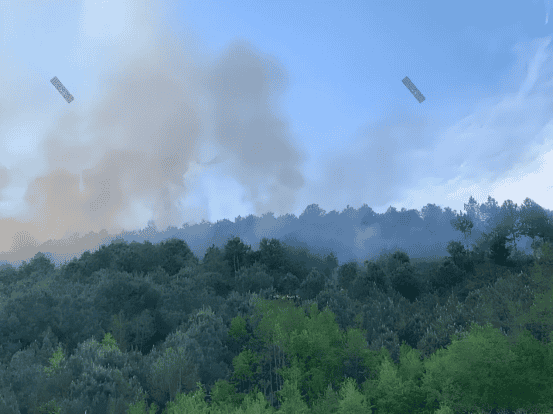
As global climate change intensifies, forest fires occur more frequently and with greater destructive power, posing severe challenges to traditional firefighting water supply models. Complex mountainous terrain and uneven water distribution lead to low efficiency in initial fire suppression efforts. Taking 2024 as an example, over 30% of forest fire response delays in China were caused by insufficient water sources. Mobile water reservoirs, as flexible and efficient water storage equipment, significantly enhance the response speed of water-based firefighting through the model of "storing water in the mountains and flexibly deploying water resources."
II. Requirements Analysis
Water diversion in mountainous areas is challenging, with traditional engineering solutions being costly and difficult to maintain. Anqiu City has adopted water storage tanks, each covering a radius exceeding 1 kilometer, enabling efficient water delivery uphill. In Cizhu Town, Yubei District, 11 new fire protection water tanks have been constructed, ensuring a rapid response within 20 minutes across a 3-kilometer radius, establishing an integrated four-pronged prevention and control system. Existing water storage equipment suffers from low water collection efficiency, with some unable to capture rainwater. Mobile water storage tanks feature multi-collection hood designs—such as four linearly distributed hoods—combined with self-cleaning filter plates. This enhances rainwater collection efficiency, reduces water waste, and provides an innovative solution for forest fire prevention in mountainous areas.
III. Working Principle
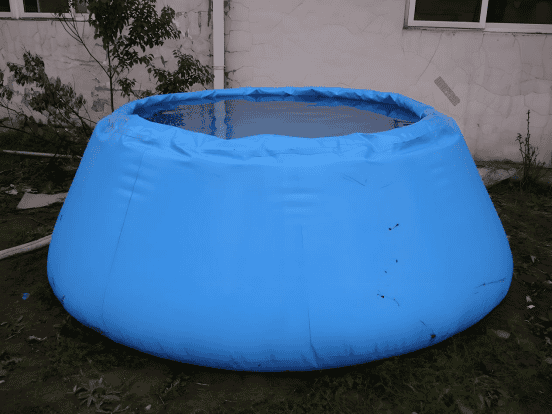
The mobile water reservoir efficiently collects rainwater through its storage tanks, with a capacity exceeding 30 tons. This enables it to meet the substantial water demands of large-scale forest firefighting operations, ensuring continuous fire suppression efforts. It can be flexibly deployed to complex terrains such as mountainous regions and forested areas.
IV. Parameters
Capacity:With a water storage capacity exceeding 30 tons, it can meet the demands of most firefighting scenarios.
Material:Made from high-strength TPU material, offering excellent abrasion resistance and corrosion resistance.
Weight:Lightweight and portable, making it easy to transport and handle.
Dimensions:Foldable design for easy storage and transport.
Environmental Adaptability: Features excellent dustproof and waterproof performance, suitable for complex terrain and harsh environments.
V. Practical Application Cases
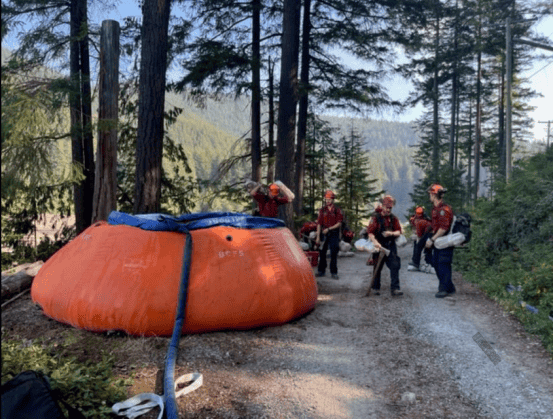
During forest firefighting operations, mobile water tanks are widely used to supply water to fire sites. For instance, in a recent forest fire, mobile water tanks were rapidly deployed near the fire scene, providing a stable water source for fire pumps. This ensured continuous firefighting efforts and effectively controlled the spread of the blaze. Additionally, in flood relief operations, mobile water tanks are utilized for temporary water storage and drainage, offering crucial support to emergency response efforts.
VI. Significance
The application of mobile reservoirs in forest fire prevention and firefighting water storage not only enhances firefighting efficiency but also effectively reduces fire damage, protecting forest resources and the ecological environment. Their flexible deployment capabilities and efficient water supply provide robust support for firefighting operations.
VII. Conclusions and Outlook
Mobile water reservoirs serve as the "lifeline water source" for forest fire prevention through modular design, intelligent maintenance, and flexible deployment. Looking ahead, the integration of drone transportation and IoT monitoring technologies will drive equipment upgrades toward lightweight and intelligent solutions. For instance, integrated temperature and humidity sensors could enable real-time water volume regulation, while satellite positioning could optimize reservoir site layouts. It is recommended to incorporate mobile reservoirs into the national forest fire prevention standards system and increase infrastructure investment in remote forest areas to establish an integrated aerial-ground-space firefighting water storage network.