



Emergency Self-Organizing Network Solution: Building a Flexible and Reliable Emergency Communication
I. Background Overview
During natural disasters, emergencies, or large-scale crises, traditional communication networks often fail due to infrastructure damage or network congestion. Emergency self-organizing network solutions aim to rapidly establish a flexible, reliable, and self-healing wireless communication network, ensuring instant communication and efficient command and dispatch among rescue teams.
II. System Architecture and Core Components
2.1 System Architecture Overview
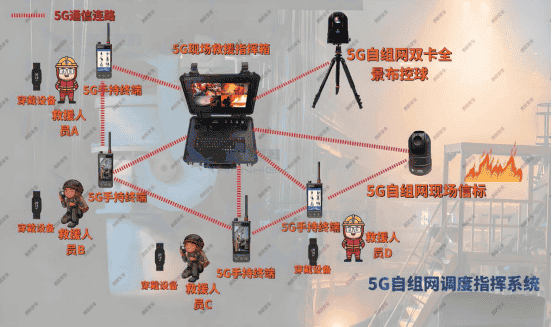
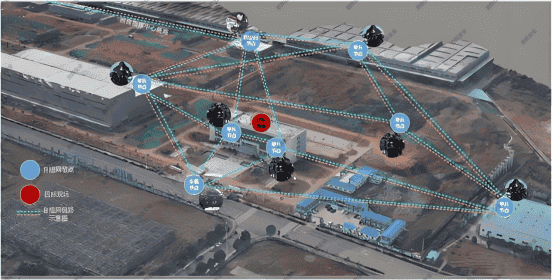
The emergency ad hoc network employs a distributed architecture, with each node possessing routing, relaying, and data processing capabilities. It supports multi-hop communication, enabling broader coverage across larger areas.
2.2 Core Components
Self-Organizing Network Node: Equipped with a high-performance wireless transceiver module supporting multiple frequency bands, it combines intelligent routing algorithms with an embedded processor to enable efficient data transmission and local processing. Optional GPS modules are available for positioning.
Central Control Station: Features robust data processing and analytical capabilities, displaying network topology and data transmission status through a graphical interface, and supporting remote control and configuration.
Terminal Devices: Includes handheld radios, vehicle-mounted communication equipment, drone communication modules, etc., supporting voice, video, and data communication while integrating GPS and GIS functionality.
III. Core Functions
3.1 Automatic Networking and Self-Healing
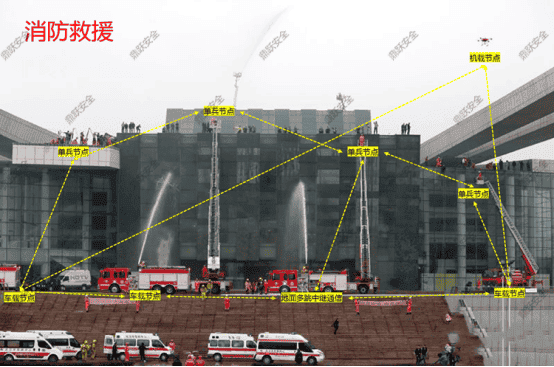
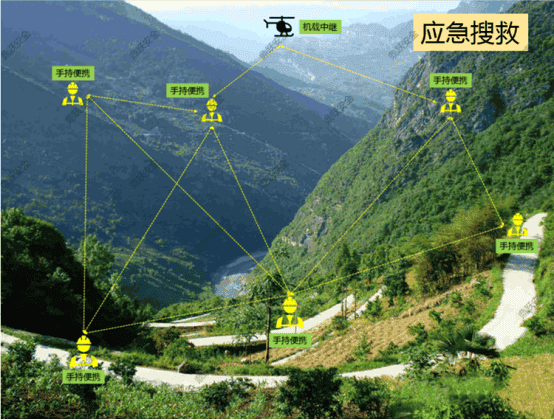
Nodes automatically discover and connect to each other, forming a multi-hop network. When a node or link fails, the system automatically finds new routing paths to ensure network connectivity.
3.2 Efficient Data Transmission
Supports QoS management, data compression, and encryption technologies, dynamically adjusting bandwidth allocation to ensure priority transmission and security for critical data.
3.3 Real-Time Voice and Video Communication
Delivers high-definition voice and video calling capabilities, supports multi-party conferencing, and enables real-time transmission of live footage to support remote command operations.
3.4 Data Acquisition and Monitoring
Integrate multiple sensors to collect real-time field data, combined with a GIS system to enable data visualization and monitoring.
3.5 Emergency Command and Dispatch
Through electronic maps and real-time positioning capabilities, it enables the rapid formation of temporary command teams, facilitates the issuance of emergency directives, and ensures the efficient execution of rescue operations.
3.6 Security Authentication and Data Encryption
Employing multi-factor authentication mechanisms and data encryption technologies to ensure the authenticity of user identities and the security of data transmission.
IV. Application Scenarios and Case Studies
Emergency ad hoc networks are widely deployed in scenarios such as natural disaster relief, public safety incidents, and temporary event support, providing robust communication support for rescue operations.
During a certain Indian Ocean tsunami, coastal communication infrastructure was nearly completely destroyed, severely hampering international relief efforts. Following the disaster, multiple international aid organizations swiftly deployed emergency ad hoc networking technology to provide temporary communication services to affected areas. These ad hoc networking devices enabled global connectivity via satellite links, allowing rescue teams to maintain contact with the outside world, coordinate supply transportation and rescue operations, and significantly enhance the efficiency and effectiveness of relief efforts.
V. Summary and Outlook
Emergency self-organizing network solutions demonstrate tremendous application potential in emergency communications due to their flexibility, reliability, and rich functionality. With technological advancements, these networks will play an increasingly vital role across more sectors, contributing to societal security and stability.